THE BILLION-DOLLAR HUMANOID BLIND SPOT: Why Humanoid Robotics' Patent Gap Should Terrify Venture Capital

Updated: Aug 11
By Dorian Cartwright, Patent Attorney | July 26, 2026
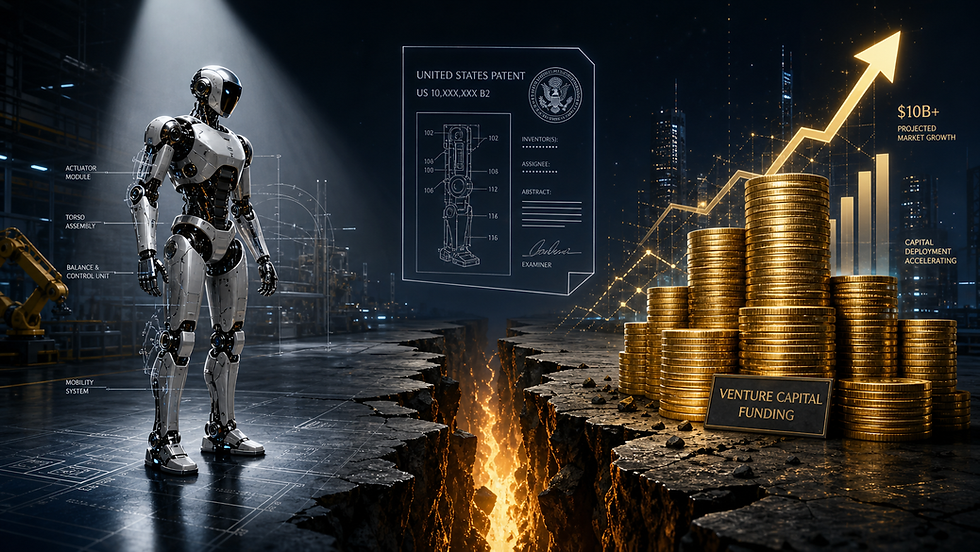
On the factory floor of the humanoid robot revolution, something isn't adding up -- while funding from humanoid VC skyrockets, patent filings for 20-years of technology exclusivity has not kept pace. To be more concise, robot patent filings today carve out market exclusivity through 2046.
In the 12 to 18 months since PatentVest published its landmark analysis — "Humanoid Robots: The Disconnect Between IP Strength and VC Funding of US and European Humanoid Robot Startups" — the gap between capital deployment and intellectual property protection has not narrowed. It has widened into a chasm.
(https://lnkd.in/gCG89z9y)
To illustrate the consequences, Apple introduced their game-changing iPhone in 2007. Any patents filed concurrent with the first iPhone introduction will not expire until next year in 2027. This is an incredible strategic IP position.
Here's the due diligence question for VCs and AI clients:
Are the billions flowing into humanoid startups matched by defensible IP that can survive scale, copying, and the inevitable licensing wars? The PatentVest report puts it bluntly: "IP is now a gating factor for scale, licensing, and long-term value capture".
With the humanoid robot market projected to hit $200B by 2035, the exposure is real.
The strongest moats come from what's patented—and who controls the architectural claims that every deployer will eventually need.
Where does your portfolio stand?



Comments