Patents List

Web Page for LLM Token Reduction
Improves AI-enabled web delivery by reducing unnecessary language model token consumption through intelligent page handling and selective content presentation. The invention is directed to lowering inference cost while preserving user experience. It is applicable to AI search, enterprise knowledge systems, and web-scale AI applications. The technology reduces operational expense while improving scalability for large language model deployments.

OS-Level AI Agent Firewall
Introduces an operating-system-level security layer that governs interactions between AI agents and protected computing resources. Rather than trusting every AI-generated request, the firewall validates intent, context, and policy before execution. The architecture provides enterprise-grade governance for autonomous AI agents and establishes a foundational security layer for future AI operating systems.

LLM Task-Based Data Center Cooling
Optimizes cooling infrastructure by understanding the computational characteristics of AI workloads rather than treating all processing equally. The system dynamically allocates cooling resources based on predicted task demand, reducing energy consumption while maintaining performance. The invention addresses one of the largest operational costs associated with modern AI infrastructure.

Collaborative Physical AI Teleoperation
Extends teleoperation beyond simple remote control by enabling intelligent collaboration between humans and autonomous physical AI systems. Human operators can intervene, supervise, or share control with AI while maintaining safe execution. The technology supports industrial automation, service robotics, and hazardous-environment operations.

Continuous Biometric AI Governance
Provides continuous identity verification for AI sessions using biometric validation rather than one-time authentication. The system continuously verifies authorized users throughout an AI interaction, reducing the risk of session hijacking and unauthorized access. It is applicable to enterprise AI, secure assistants, and regulated industries.

KV Cache Kill Switch
Introduces mechanisms for securely terminating, purging, or isolating AI inference state stored within transformer key-value caches. The technology enhances privacy, security, and regulatory compliance by preventing residual inference state from persisting after session termination. It is relevant to cloud AI providers and enterprise AI deployments.

KILL SWITCH GOVERNANCE OF ARTIFICIAL INTELLIGENCE (AI) SESSION MEMORY THROUGH USER INVOKED AND POLICY TRIGGERED KV CACHE SANITIZATION
Kill switch governance of artificial intelligence session memory is disclosed. A transformer based inference system maintains a session specific KV cache comprising cached key tensors and value tensors derived from prompt-associated inputs. A software control, hardware actuator, or both initiate a kill switch responsive to user actuation, detection of a privacy condition, or detection of a policy condition. The system identifies session derived inference state artifacts, including at least the session specific KV cache, and sanitizes the identified artifacts by deleting, overwriting, invalidating, quarantining, encrypting, cryptographically erasing, access revoking, or otherwise rendering them unavailable for subsequent inference while preserving unrelated model weights. The sanitization may apply to remote data-center KV cache partitions, local edge inference KV cache entries, or both. In some embodiments, a purge receipt is generated without retaining plaintext prompt content.

Physical AI Visual Token Reduction
Reduces computational cost in embodied AI by minimizing unnecessary visual processing while preserving environmental awareness. The system intelligently prioritizes visual information needed for robotic decision-making, enabling more efficient physical AI operation on constrained hardware.

OS Firewall for Privacy Edge Inferencing
Protects sensitive information during edge AI inference through operating-system-level privacy controls. The invention enables AI workloads to execute near users while enforcing policy-driven data protection. It supports privacy-preserving AI deployment across distributed edge environments.

Agent Multitier Inference Disaggregation
Distributes AI inference intelligently across multiple compute tiers, balancing latency, cost, and resource utilization. Different portions of an AI workload execute where they are most efficient while appearing as a unified system. This architecture supports scalable enterprise AI infrastructure.
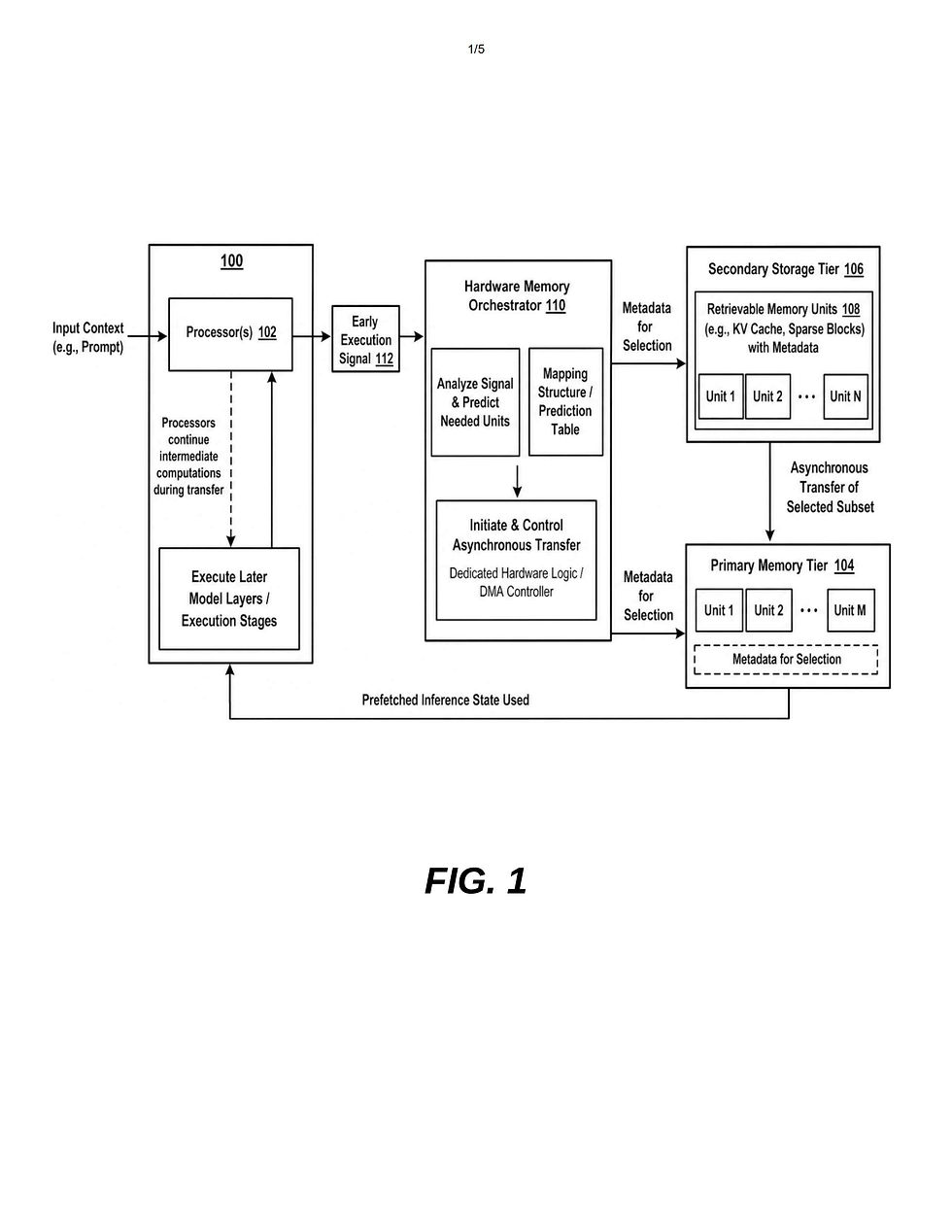
PROTECTED PREDICTIVE KV CACHE AND INFERENCE STATE RESIDENCY CONTROL FOR MULTI-SESSION ARTIFICIAL INTELLIGENCE (AI) ACCELERATOR MEMORY
A protected predictive KV cache residency system executes a preliminary portion of an attention based artificial intelligence model to generate a model derived early execution signal. Accelerator resident memory orchestration logic compares the signal with metadata associated with retrievable KV cache units stored outside accelerator memory and selects a subset predicted to be consumed by a later attention operation or decoding stage. The selected subset is associated with an isolation token and asynchronously transferred into a protected region of accelerator memory while intermediate model execution continues. Later memory access is validated against the isolation token, and access by another session is prevented.

Predictive Actuation Gating
Establishes the TrustBoundary by requiring predictive validation before AI-generated physical actions reach robot actuators. Candidate actions are evaluated against safety and operational constraints before execution. The architecture is designed to improve safety, insurability, and governance of physical AI systems.


FOOT-LOCAL PREDICTIVE CONTACT VALIDATION FOR HUMANOID ROBOT LOCOMOTION
A humanoid robot system includes a locomotion controller, robotic foot assembly, foot-local predictive contact validator, and footfall-release controller. A candidate footfall command is received for the robotic foot assembly. Before weight transfer or lower-body actuator execution, the foot-local predictive contact validator evaluates local foot state, terrain state, and body-state context to predict a contact consequence associated with the candidate footfall command. The predicted contact consequence may include slip risk, toe overhang, terrain-compliance mismatch, insufficient contact area, ankle torque overload, or unsafe load transfer. The footfall-release controller evaluates the predicted contact consequence against a footfall-safety policy and selectively releases, modifies, delays, or blocks the candidate footfall command. In some embodiments, a release authorization defines a validator-derived support envelope enforced by one or more downstream actuator controllers.

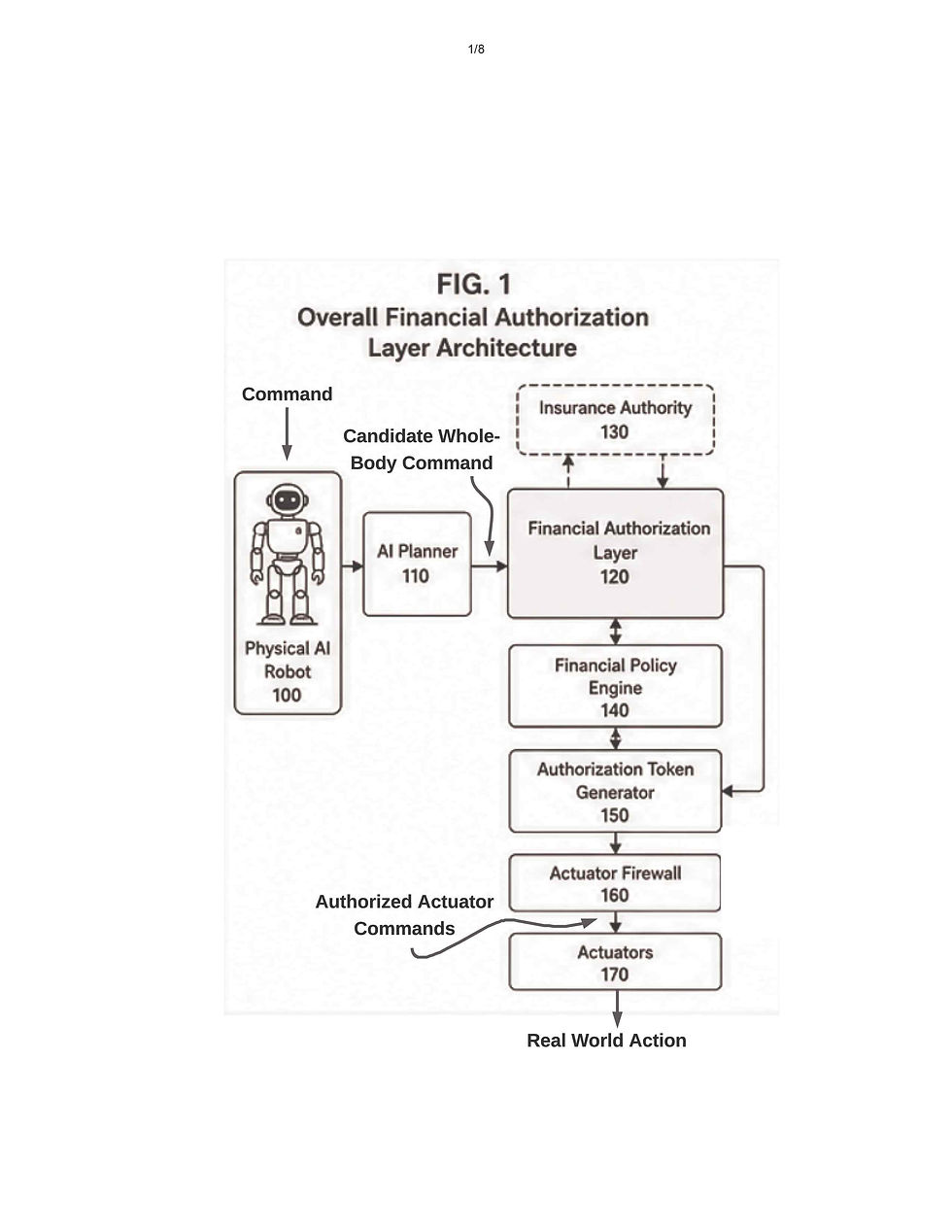
FINANCIAL AUTHORIZATION AND EXECUTION GOVERNANCE FOR PHYSICAL ARTIFICIAL INTELLIGENCE (AI)
A physical artificial intelligence system includes an artificial intelligence planner, one or more actuators, and a financial authorization layer interposed between the planner and the actuators. Before execution, the financial authorization layer determines a financial authorization requirement based on mission classification, runtime risk, contextual state, jurisdiction, payload, or other operational information, and validates a machine-readable financial authorization, including insurance, a bond, warranty, lease, escrow, permit, subscription, enterprise budget, maintenance contract, financial guarantee, regulatory fee, usage credit, or service contract. Responsive to validation, an authorization token generator issues a machine-readable execution authorization defining an execution envelope. An actuator firewall verifies the authorization and permits execution only within the execution envelope. Runtime monitoring may update risk, modify or revoke the authorization, or issue a refreshed token. Multiple authority approvals may be combined into a composite authorization and unified execution token.


Physical AI Operating System
Defines an operating system architecture specifically designed for embodied AI. The platform coordinates planning, validation, execution, governance, and hardware interaction while providing a deterministic layer between AI reasoning and physical action. It serves as the architectural foundation for the broader TrustRobotics portfolio.

World Model Gated Physical AI Execution
Uses predictive world models to simulate and evaluate candidate physical actions before actuator execution. By forecasting likely outcomes, the system authorizes only actions that satisfy safety and operational constraints, strengthening the TrustBoundary architecture.

WORLD MODEL-DERIVED PHYSICAL EXECUTION AUTHORIZATION FOR ROBOTS
A robot or other physical artificial intelligence system
controls physical execution using a predictive execution
capability. After generation of a candidate physical action and
before execution, a predictive world model generates a predicted
future physical-state representation, which is evaluated against
one or more constraints. Responsive to satisfaction of an
authorization condition, the system generates a predictive
execution capability binding the candidate physical action, a
physical-state representation used for the prediction, and
information representing the evaluation. A protected execution
component verifies that the predictive execution capability
corresponds to the action and an applicable physical state
before permitting a corresponding physical-state transition. A
change in physical state may invalidate the predictive execution
capability and require further predictive evaluation before
execution.

WI-FI ACCESS POINT-BASED SHARED WORLD MODEL FOR PHYSICAL ARTIFICIAL INTELLIGENCE
A Wi-Fi runtime operating system provides network-resident services to heterogeneous physical artificial intelligence systems. Wi-Fi infrastructure detects a connected device, classifies it as a physical AI system using association information, credentials, metadata, traffic behavior, or protocol characteristics, and selects runtime services from a physical-AI service registry. Services may include shared world state, hazards, occupancy, reservations, identity, trust, enterprise policy, protocol translation, physical-risk quality of service, localization, and telemetry. An access point maintains location-scoped physical state and physical-space reservations for a corresponding coverage region, while a wireless controller manages enterprise policy and roaming continuity. Enterprise Wi-Fi thereby functions as a runtime platform for discovering, onboarding, coordinating, and governing physical AI systems while preserving local motion and actuator control.
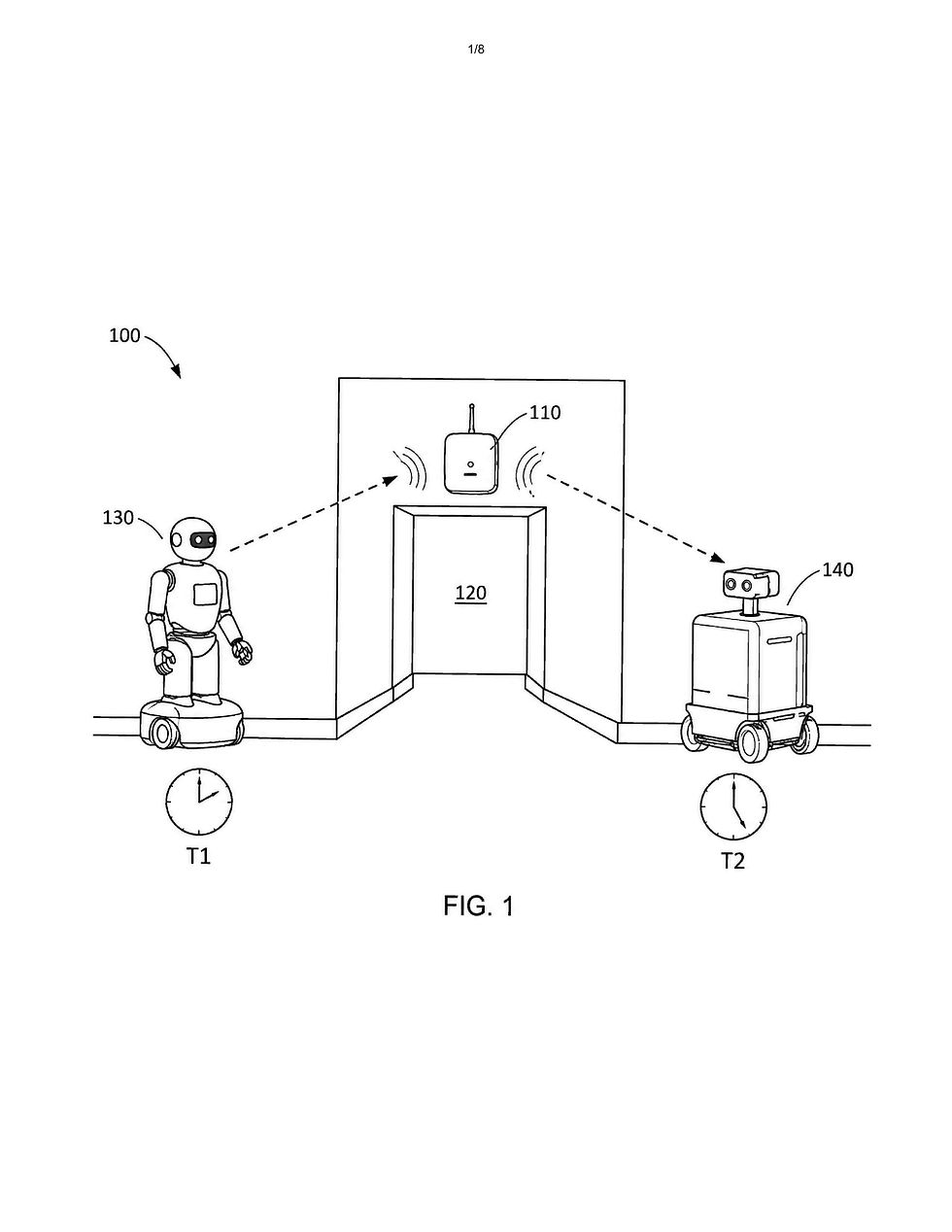
WI-FI PASSIVE OR ON-DEMAND INTERNET-OF-THINGS REGIONAL STATE DEVICE FOR PHYSICAL ARTIFICIAL INTELLIGENCE SYSTEMS
An environment-resident regional state device maintains machine-readable physical state for robots and other physical artificial intelligence systems. The device receives a regional state contribution from a first physical AI system, persists the contribution after the first system departs, and later provides state derived from the contribution to a second physical AI system that did not communicate directly with the first system. Regional state may include hazards, occupancy, reservations, infrastructure, terrain, resources, access, policies, or predicted physical conditions. The device may be continuously powered, intermittently powered, dormant, passive, batteryless, or activated or powered by an inquiry signal from an approaching physical AI system. Source identity, observation time, confidence, validity, provenance, and state aging may be maintained. A receiving physical AI system can obtain the regional state before locally sensing the represented condition and modify navigation, manipulation, reservation, validation, or another physical-world operation.

PHYSICAL TOKEN ENGINE FOR PHYSICAL ARTIFICIAL INTELLIGENCE
A Physical Token Engine receives physical state signals from sensors of a physical artificial intelligence device and generates model consumable physical tokens. The engine may include a physical signal interface, temporal-alignment circuitry, modality-responsive frontends, learned or deterministic token-generation circuitry, body topology encoding, validity processing, scheduling, token caching, and one or more output interfaces. A physical token may identify a modality, body location, kinematic relationship, event, timestamp, priority, validity state, codebook version, and encoded physical payload. The engine may suppress redundant data and provide event-responsive tokens through a prioritized or safety-isolated path. Distributed implementations may tokenize signals locally in hands, feet, limbs, actuators, or sensor modules. The engine may translate robot-native signals into a canonical embodiment space and may configure tokenization according to an intended physical action. Compatible tokens may be generated from real sensors, simulation, digital twins, and recorded traces.

STATE-PRESERVING INTERRUPTION OF IN-PROGRESS INFERENCE FOR PHYSICAL ARTIFICIAL INTELLIGENCE MISSION AND ACTION CONTROL
A physical artificial intelligence system receives a verbal, gesture, text command or other interruption during in-progress inference for a robot mission or candidate physical action. An inference-interruption controller generates an updated branch context, preserves unaffected inference state, and selectively updates affected state without restarting inference. The resulting inference modifies a mission, route, trajectory, manipulation plan, or candidate action before actuator execution. The system may identify an interrupt-safe boundary, preserve execution metadata, revise a predicted future, revoke stale action authority, and validate an updated action before release.

HUMAN-SELECTABLE PRESERVED INFERENCE BRANCHES FOR PHYSICAL ARTIFICIAL INTELLIGENCE MISSIONS AND ACTIONS
A physical artificial intelligence system generates multiple candidate mission or physical-action branches before selection and preserves branch-specific reusable inference state for at least two branches. The preserved state may include key-value cache state, world-model state, mission-planning state, navigation state, motion-planning state, object state, person state, predicted physical state, or candidate-action state. An output interface presents a branch-selectable interaction corresponding to the candidate branches. A verbal, textual, gestural, gaze-based, or other response is mapped to a selected branch identifier. The system retrieves the preserved state associated with the selected branch and continues physical artificial intelligence processing without regenerating at least a portion of an earlier inference or planning sequence. Preserved physical state may be compared with current sensor data so that a valid state portion is retained while an invalid state portion is updated. A resulting physical action may be validated before actuator control.

DYNAMIC CONVERSION OF A ROBOT INTO
AN ON-DEMAND NETWORK INFRASTRUCTURE NODE
A network controller temporarily converts a mobile robot from an
endpoint assigned to a physical mission into a networkinfrastructure node. The controller detects a network-service
deficit and selects a deployment position using predicted
network benefit and robot-diversion cost. An infrastructure-role
authorization object defines a permitted service, recipient or
traffic scope, and limiting condition. A conversion command
causes deployment, and network topology and service-enforcement
state incorporate the robot within the authorized scope. During
service, the controller reevaluates continuing benefit relative
to updated diversion cost. When the diversion criterion is no
longer satisfied, the controller initiates transfer of
continuity state to replacement infrastructure and disables the
robot's infrastructure-service authority while retaining
endpoint admission. Implementations support moving demand,
restricted bridging, edge computing, detachable nodes, and
multiple cooperating robots.

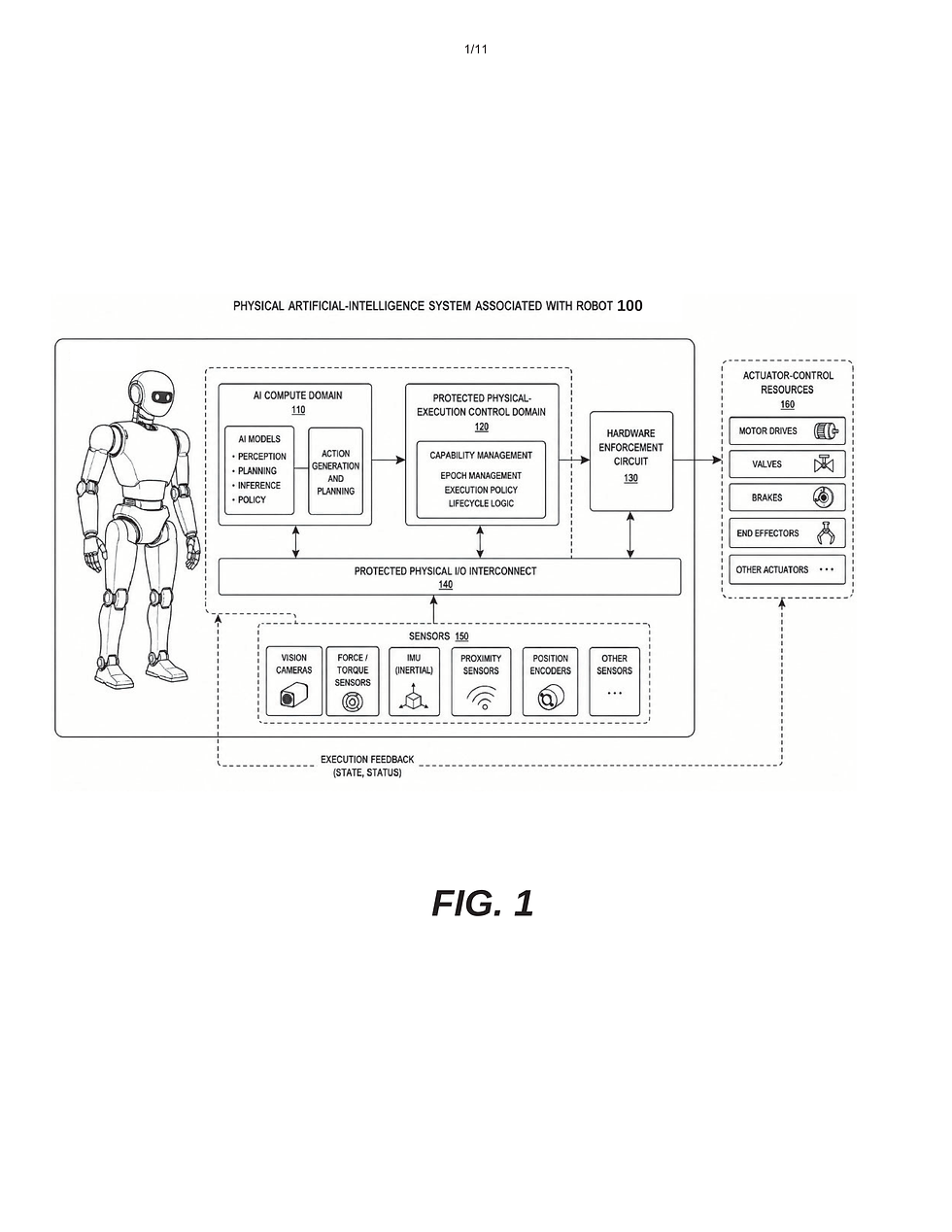
HARDWARE-ENFORCED PHYSICAL-STATE-TRANSITION PRIVILEGE
ARCHITECTURE FOR PHYSICAL ARTIFICIAL INTELLIGENCE
A physical artificial intelligence computing architecture controls
execution of artificial intelligence-generated physical state transitions as
privileged machine operations. An artificial intelligence compute domain
generates a canonical physical-action descriptor representing a proposed
transition of a physical state of a machine while lacking an alternate direct
hardware path for causing the transition. A protected physical-execution
control domain establishes a physical-operation capability that binds the
proposed transition to a pre-execution physical-state version, one or more
authorized physical endpoints, a physical execution envelope, a validity
condition, and an execution-use state. A hardware enforcement circuit
positioned in a physical input/output path verifies actuator-directed
transactions against the capability and current physical state before
permitting the transactions to reach actuator-control resources. Acceptance
of a transaction advances, attenuates, or consumes the execution-use state. A
physical-state update, execution-state transition, expiration, or revocation
may invalidate or suspend remaining authority. Implementations include
physical actuation management units, protected capability registers,
restricted physical-action instruction sets, secure command queues, protected
interconnects, systems-on-chip, chiplets, programmable logic, and actuator-
local enforcement circuits.
ROBOT PROTECTED PHYSICAL-OPERATION AUTHORIZATION LIFECYCLE
A robot maintains protected physical-operation
authorization separately from an artificial intelligence system
that generates a candidate robot action. The protected
authorization may specify a robot-state value or epoch,
authorized actuator scope, physical execution envelope, validity
information, and execution-use state. Hardware enforcement
positioned in an actuator execution path permits actuator-
directed operations only while applicable protected
authorization remains valid. As physical execution proceeds, the
authorization may be consumed, monotonically advanced,
attenuated, suspended, revoked, or invalidated. A change in
protected robot state may advance a robot-state epoch such that
authorization associated with an earlier physical state cannot
be replayed after the robot has physically changed. The
architecture may use a Physical-IOMMU or physical-action memory-
protection unit, protected capability registers, a Physical-
Action instruction-set architecture, protected actuator queues,
or endpoint-local enforcement, and preferably prevents an AI-
controlled alternate path from bypassing the protected actuator-
privilege mechanism.

Humanoid Robot Constitution Runtime for Governing Physical AI Operating System Execution
A humanoid robot constitution runtime governs proposed humanoid robot operations before propagation into lower execution layers. A humanoid robot includes sensors, actuators, processors, and memory storing a machine-readable constitution defining constitutional provisions, authority domains, and persona constraints. A constitutional runtime associated with a Physical Artificial Intelligence Operating System (PAIOS) receives a proposed humanoid operation from an application, planner, behavior tree, large language model, vision-language-action model, operator interface, or other source. The constitutional runtime determines applicable authority domains and persona constraints, evaluates the proposed operation against the machine-readable constitution, resolves conflicts where applicable, and generates a constitutional enforcement output. The constitutional enforcement output may permit, deny, modify, route, or condition the proposed operation before the operation is propagated to a ROS2 middleware pathway, validation layer, actuation-dispatch trust layer, actuator firewall, driver, or actuator controller.
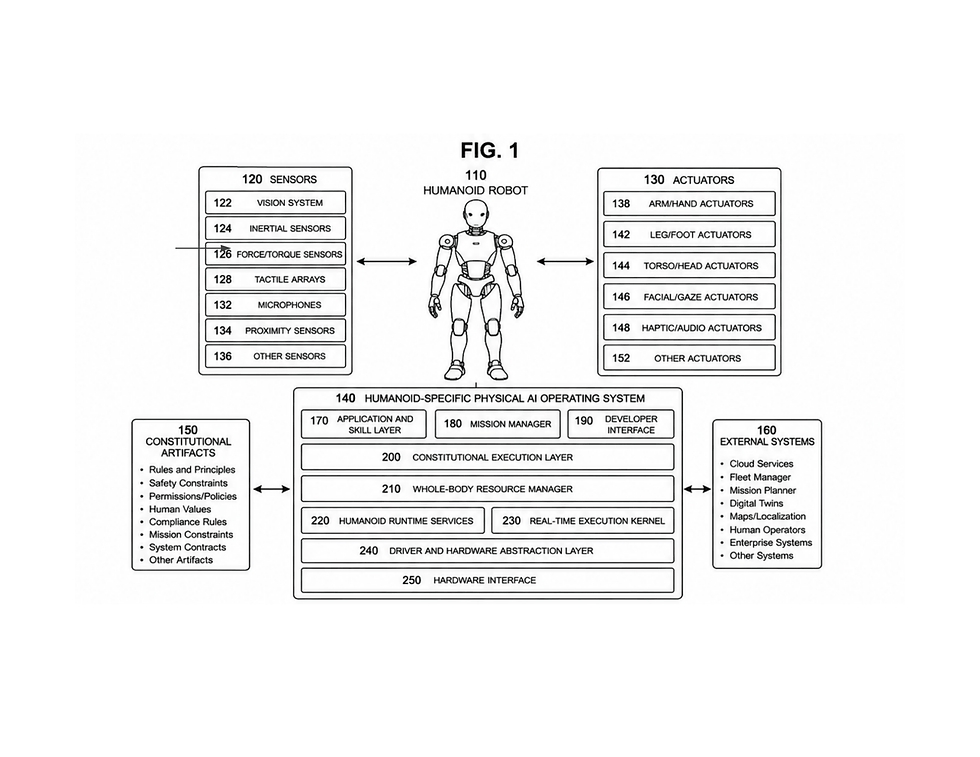
Humanoid-Specific Physical Artificial Intelligence Operating System
A humanoid-specific Physical AI operating system manages execution authority for a humanoid robot. The operating system receives physical-action requests from applications, skills, planners, or AI agents and converts the requests into candidate physical action objects. A constitutional execution layer loads or compiles constitutional constraints, generates validator graphs, evaluates action authority, and issues release tokens. A whole-body resource manager allocates humanoid body resources including actuators, torque, power, balance margin, support contacts, tactile bandwidth, locomotion authority, manipulation authority, gaze, and human-contact authority. A real-time execution kernel schedules multi-rate humanoid operations and permits actuator execution only through an actuator firewall enforcing release tokens, action manifests, and safety envelopes. Execution telemetry is monitored for exceptions, recovery, learning, auditing, and constitution updates.

HUMANOID INSURANCE AUTHORIZATION AND WHOLE-BODY EXECUTION GOVERNANCE
A humanoid robot includes a whole-body planner, articulated actuator subsystems, and a financial authorization layer positioned before physical execution. A financial authorization engine decomposes a candidate whole-body behavior into body-region operations and determines a composite financial-risk state from balance, fall, manipulation, human-contact, payload, property, safeguard, and contextual data. A humanoid insurance authorization layer receives parameters and returns an insurance authorization result to the financial authorization engine, which may combine the result with other financial-authority results and issue a machine-readable execution token defining body-region execution envelopes. An actuator firewall permits coordinated actuation only within the authorized envelopes and may enforce updated, restricted, or revoked authority during runtime.

HUMANOID INSURANCE EXECUTION AUTHORIZATION AND ACTUATOR ENFORCEMENT
A humanoid robot includes a whole-body planner, articulated
actuator subsystems, and a financial authorization layer
positioned before physical execution. A financial authorization
engine decomposes a candidate whole-body behavior into bodyregion operations and determines a composite financial-risk
state from balance, fall, manipulation, human-contact, payload,
property, safeguard, and contextual data. A humanoid insurance
authorization layer receives parameters and returns an insurance
authorization result to the financial authorization engine,
which may combine the result with other financial-authority
results and issue a machine-readable execution token defining
body-region execution envelopes. An actuator firewall permits
coordinated actuation only within the authorized envelopes and
may enforce updated, restricted, or revoked authority during
runtime.
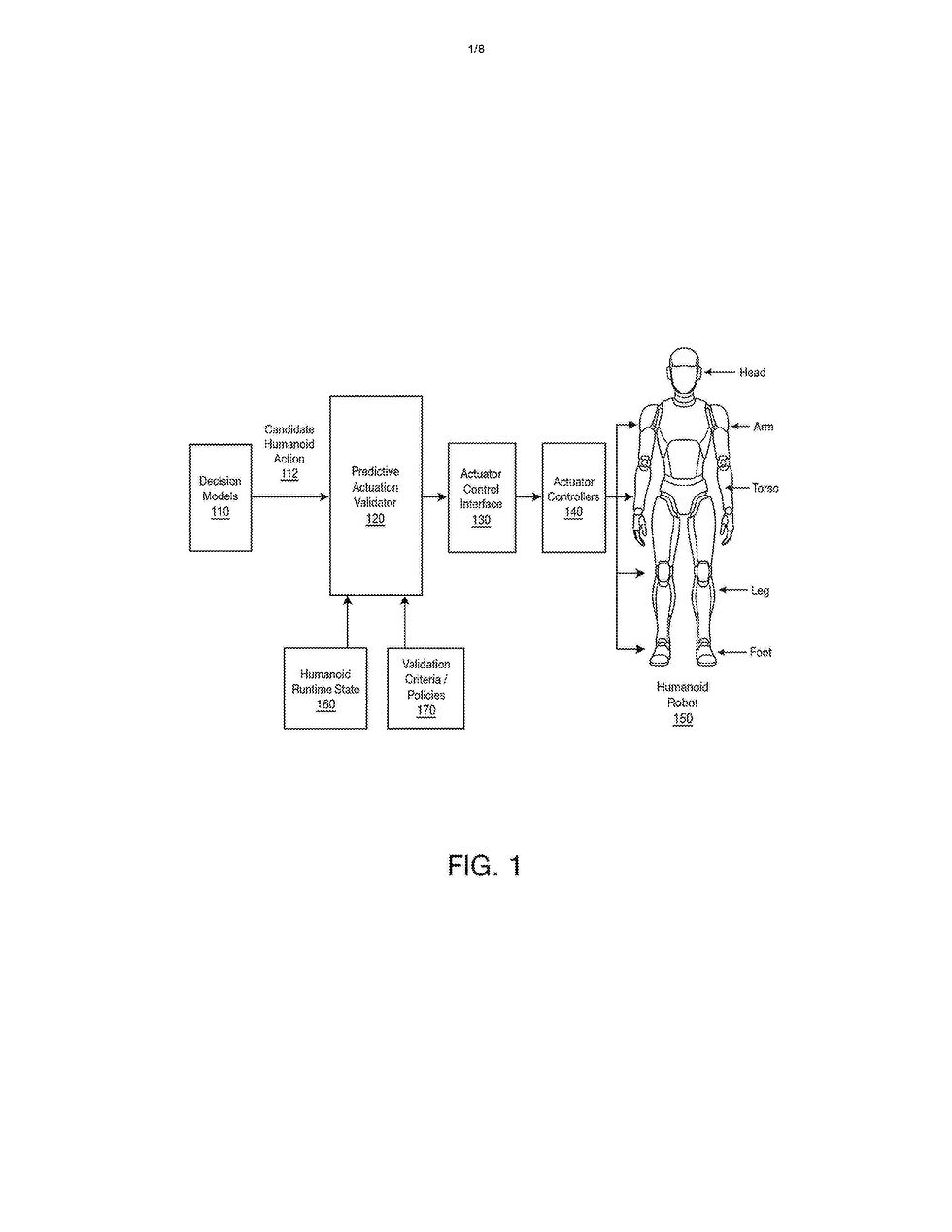
HUMANOID-NATIVE PREDICTIVE ACTUATION VALIDATION USING WHOLE-BODY RUNTIME STATE
A humanoid robot intercepts a candidate humanoid action before actuator-command dispatch and obtains whole-body runtime state including body configuration and a support, contact, environment, object, human-relative, or actuator state. A predictive actuation validator predicts future physical consequences of executing the candidate action over an action-dependent prediction horizon and evaluates the consequences against humanoid-native criteria including stability, support contact, self-collision, human clearance, actuator limits, terrain contact, or object retention. The validator may dynamically select or configure a forward-looking evaluator according to participating body regions, support phase, contact schedule, payload, uncertainty, or risk. More than one evaluator type may predict different consequence classes for a common action. A release decision releases, modifies, stages, decomposes, reroutes, or rejects the action. Motion of one body region may be validated based on a predicted consequence at another body region, enabling whole-body, cross-region predictive evaluation before physical execution.

BRAZILIAN JIU-JITSU HUMANOID ROBOT PHYSICAL ACTION CONTROL
A humanoid robot performs a Brazilian jiu-jitsu (BJJ) or other
contact rich physical interaction using a dynamically maintained
inter-body relational state. Sensor information is used to
determine a machine-readable representation of physical
relationships between body regions of the humanoid robot and
another physical entity, including contact, gripping, hooking,
framing, loading, supporting, constraining, controlling,
movement, or entanglement relationships. The inter-body
relational state is provided to a physical action generation
model to generate a physical action for performance by the
humanoid robot. Additional sensor information obtained during or
after performance of the physical action is used to update one
or more of the physical relationships. A subsequent physical
action is generated based at least in part on the updated interbody relational state, enabling artificial intelligence based
physical control responsive to evolving relationships between
bodies.